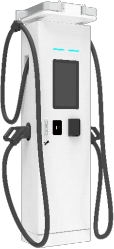
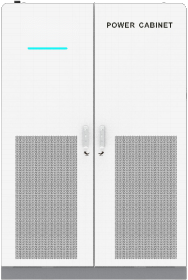
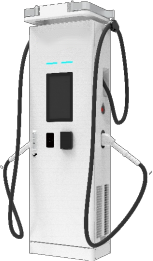

The YTS series is a split-type high-power charging system utilizing 40kW potting charging modules for smart power distribution, with an output voltage range of DC200-1000V, making it compatible with all vehicle models on the market. It supports various payment methods, including credit card payments, and can be equipped with a cable management device, allowing it to charge up to 12 vehicles simultaneously.
The series is a split-type high-power charging system utilizing 40kW potting charging modules for smart power distribution, with an output voltage range of DC200-1000V, making it compatible with all vehicle models on the market. It supports various payment methods, including credit card payments, and can be equipped with a cable management device, allowing it to charge up to 12 vehicles simultaneously

I. Installation & Construction
Q: What are the power capacity requirements for a 480KW charging pile?
A: It needs to be connected to 380V three-phase electricity. It is recommended that the capacity of the power distribution system be no less than 630KVA. For old residential communities or sites, it is necessary to apply for power capacity expansion in advance.
Q: What are the safety specifications for the installation location?
A: A heat dissipation space of more than 1.5 meters must be reserved in front of and behind the equipment to avoid direct sunlight. The grounding resistance must be ≤4Ω. For old buildings, galvanized angle steel grounding electrodes need to be re-embedded.
Q: How to select cable specifications?
A: The power supply cable shall adopt 2 sets of YJV 3×240mm²+2×120mm² copper core cables. For long-distance transmission, the cable diameter needs to be increased to reduce voltage drop.
Q: Can a 480KW charging pile be installed in a rented parking space?
A: A lease contract of more than 1 year and a written consent from the property management are required. In some cities, applications for public charging piles are supported, but they need to be reported and installed uniformly by the property management.
Q: How to deal with severe weather for outdoor charging piles?
A: Piles with an IP67 waterproof rating must be selected and equipped with rain shelters. Cable interfaces shall be UV-resistant and mildew-proof to avoid long-term exposure to humid environments.
II. Operation & Usage
Is a 480KW charging pile compatible with all electric vehicles?
A: It is only compatible with vehicles on 800V high-voltage platforms (such as ZEEKR 001, XPeng G9). The actual power of 400V vehicles is limited by the maximum current of the battery pack, usually only reaching 100-150KW.
Q: What items need to be checked before charging?
A: Confirm that the charging gun is not damaged and there is no foreign matter in the interface. Ensure the vehicle is turned off and the Battery Management System (BMS) is compatible. For public charging piles, scan the QR code to start.
Q: Can charging be interrupted during the process?
A: It is strictly forbidden to pull out the gun directly! You must first click "Stop Charging" on the APP or screen, and operate only after the gun lock is unlocked to avoid arc damage to the interface.
Q: What are the precautions for use on rainy days?
A: Wear insulating gloves during operation and check that there is no accumulated water in the charging gun interface. Stop using immediately and cut off the power during thunderstorms.
Q: How to improve charging efficiency?
A: Choose the off-peak electricity price period from 22:00 to 8:00, where the electricity fee is 40% lower than that during the daytime. Keep the vehicle battery power in the range of 20%-80% to avoid overcharging at the end.
III. Troubleshooting & Maintenance
Q: What to do if the charging pile fails to start?
A: Check if the power switch is turned on and if the emergency stop button is reset. If the display screen has no response, it may be a fault of the main control board, and you need to contact after-sales service for replacement.
Q: What are the possible reasons for slow charging speed?
A: Unstable grid voltage (lower than 340V), excessive cable resistance, vehicle BMS limiting power, or failure of the charging pile's output module.
Q: How to handle frequent power outages during charging?
A: Check if it is caused by line overload or battery failure. If it is due to abnormal heat dissipation, clean the fan dust or replace the liquid cooling module.
Q: How to clean the housing of charging pile?
A: Wipe it with dry cloth monthly and avoid using chemical cleaning agents. Check if the sealing rubber strips are aged and replace waterproof parts in a timely manner.
Q: What is the general service life of a charging pile?
A: It can reach 8-10 years under normal use. Regular maintenance (such as capacitor replacement and grounding inspection) can extend the service life to more than 12 years.
IV. Safety & Emergency
Q: How to handle electric leakage of the charging pile?
A: Immediately press the emergency stop button, turn off the main power switch, stay away from the device, set up a warning sign, and call 119 and the after-sales service number.
Q: Can charging be done during thunderstorms?
A: No! Outdoor charging piles must be equipped with lightning protection devices. Cut off the power and stop using the pile during thunderstorms to prevent equipment damage from lightning strikes.
Q: Can debris be piled around the charging pile?
A: No! Keep the area within 1 meter free of flammable materials and clean dust regularly to prevent short circuits and fires.
Q: Can children operate the charging pile?
A: No! Warning signs must be set up, and parents should supervise to prevent children from touching the charging interface.
Q: How to formulate an emergency plan?
A: Clarify the handling procedures for electric leakage, fire, and equipment failure. Assign responsible people and conduct regular drills. Equip emergency supplies such as fire extinguishers and insulating gloves.